





Here Is A Quick Cure For WHY IS THE GOVERNMENT REWRITING THE RULES FOR THE NEXT DATA CENTERS
Artificial intelligence is driving an unprecedented boom in data centers worldwide. Discover why governments are changing regulations, investing in infrastructure, and racing to support the future of...

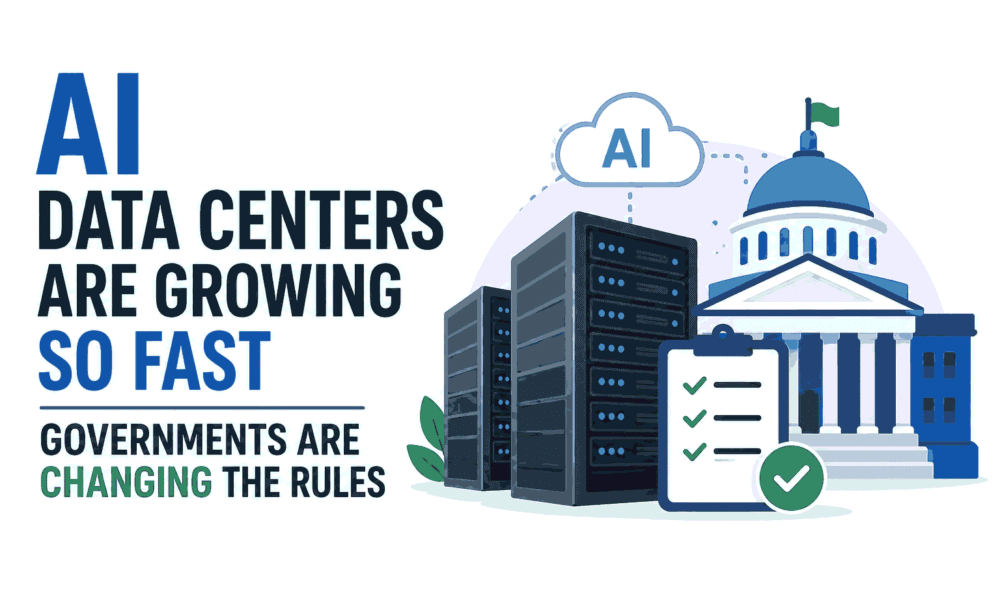
Artificial intelligence is transforming nearly every industry, from healthcare and finance to entertainment and education. Behind every AI chatbot, image generator, recommendation engine, and autonomous system lies an enormous network of servers working around the clock. These facilities, known as data centers, have become the backbone of the AI revolution.
Table Of Content
As AI adoption accelerates, governments around the world are facing a new challenge: ensuring there is enough infrastructure, energy, and regulatory support to keep up with growing demand. In response, many countries are changing long-standing rules and policies to speed up data center development and strengthen their position in the global AI race.
The growth of AI data centers is no longer just a technology story. It has become an economic, political, and environmental issue that will shape the future of nations for decades to come.
Why AI Requires Massive Data Centers
Traditional internet services such as email, web hosting, and online shopping require significant computing resources. However, AI systems demand far more processing power.
Modern AI models are trained using billions or even trillions of data points. Training these systems requires thousands of advanced processors operating simultaneously for weeks or months. Even after training is complete, AI applications continue to consume enormous computing resources whenever users interact with them.
Every AI-generated image, voice response, or search result requires servers to perform complex calculations in real time. As millions of people use AI tools daily, the demand for computing power continues to increase.
This growing need has triggered a worldwide boom in data center construction.
The Global Data Center Construction Rush
Major technology companies are investing billions of dollars into expanding their infrastructure.
New AI-focused data centers are being built across the United States, Europe, Asia, and the Middle East. These facilities often cover hundreds of thousands of square feet and contain thousands of specialized AI chips.
Technology giants are competing to secure enough capacity to power future AI products. Investors view data centers as critical assets because they support everything from cloud computing to advanced machine learning systems.
The result is a construction boom unlike anything seen since the early days of the internet.
Industry experts believe demand for AI computing infrastructure could continue growing throughout the next decade as businesses increasingly integrate AI into daily operations.
Why Governments Are Getting Involved
Building a modern AI data center is not as simple as constructing a traditional office building.
Developers must obtain permits, secure land, connect to power grids, establish water resources, and comply with environmental regulations. In many regions, these processes can take years.
Governments fear that slow approval timelines could cause companies to build their facilities elsewhere, potentially resulting in lost investment, jobs, and technological leadership.
To remain competitive, policymakers are introducing measures designed to accelerate infrastructure development.
These efforts include:
- Faster permit approvals
- Streamlined environmental reviews
- New incentives for infrastructure investment
- Expanded energy projects
- Tax benefits for technology companies
- Public-private partnerships
Many governments now view AI infrastructure as strategically important, similar to highways, airports, and telecommunications networks.
The Growing Energy Challenge
One of the biggest concerns surrounding AI data centers is energy consumption.
Large facilities require vast amounts of electricity to operate servers and cooling systems. Some AI campuses consume as much power as small cities.
As demand grows, utilities and governments face difficult questions:
Can existing power grids support future AI expansion?
Will renewable energy sources be sufficient?
How can energy reliability be maintained during periods of peak demand?
These questions have prompted policymakers to rethink energy strategies.
Several countries are investing heavily in renewable energy projects, battery storage systems, and grid modernization initiatives. Others are exploring nuclear energy as a long-term solution for supporting AI infrastructure.
The connection between artificial intelligence and energy policy is becoming increasingly important.
Environmental Concerns and Sustainability
The rapid growth of AI infrastructure has sparked environmental debates.
Critics argue that expanding data center networks could increase carbon emissions and place additional pressure on water resources. Data centers require cooling systems that consume substantial amounts of water and electricity.
In response, many technology companies are pursuing sustainability goals.
Modern facilities increasingly feature:
- Energy-efficient cooling systems
- Renewable energy integration
- Water recycling programs
- Advanced power management technologies
- Carbon reduction initiatives
Governments are also introducing environmental requirements to ensure future infrastructure development aligns with sustainability targets.
Balancing technological innovation with environmental responsibility remains one of the industry’s greatest challenges.
Economic Benefits of AI Infrastructure
Despite concerns, the economic benefits of AI data centers are significant.
Large projects create thousands of construction jobs during development and support long-term employment in engineering, operations, maintenance, and security.
Data centers also attract related industries such as software development, cloud services, cybersecurity, and telecommunications.
Regions that successfully attract AI infrastructure often experience broader economic growth through increased investment and technological innovation.
For many governments, these benefits justify efforts to accelerate project approvals and infrastructure expansion.
The competition to attract AI investment has become increasingly intense.
The Race for Global AI Leadership
Artificial intelligence is widely viewed as one of the most important technologies of the 21st century.
Countries that establish strong AI ecosystems may gain advantages in economic growth, national security, scientific research, and technological innovation.
Because data centers serve as the foundation of AI development, governments increasingly see infrastructure investment as a strategic priority.
The United States, China, European nations, and several emerging economies are all investing heavily in AI capabilities.
This competition extends beyond software and algorithms. It now includes energy production, semiconductor manufacturing, cloud infrastructure, and advanced computing facilities.
The countries that successfully build and support these systems may become future leaders in the AI economy.
What This Means for Consumers
While data center policy may seem distant from everyday life, its impact is becoming increasingly visible.
The AI tools people use every day depend on reliable infrastructure.
Faster and more powerful data centers can enable:
- Smarter virtual assistants
- Better AI search engines
- Advanced healthcare applications
- Improved business automation
- Enhanced content creation tools
- Faster cloud services
As governments support infrastructure expansion, consumers are likely to see more capable AI products and services emerge.
The pace of innovation could accelerate dramatically over the coming years.
Read More : Learn more about Technology







No Comment! Be the first one.