





Apps & Digital News
A Comprehensive Concept Matrix for Review & Study
This article provides a structured overview of two of the most transformative forces in modern digital life: mobile applications and digital news media. Whether you are studying for an exam, preparing a presentation, or simply want to understand how apps work and how news is produced and consumed today, this matrix table breaks every concept down into its main idea, a clear explanation, real-world examples, and essential key terms.
The article is divided into three sections:
Part 1 covers mobile and digital apps from their definition to monetization and user privacy.
Part 2 explores digital news media — how it is produced, distributed, and sometimes distorted.
Part 3 examines the intersection of both worlds, where news apps, algorithms, and data privacy collide.
Mobile & Digital Apps
A mobile app is more than just software — it is the primary way billions of people interact with digital services daily. From ordering food to learning a language, apps have reshaped every aspect of modern life. Understanding how they are built, distributed, and monetized is essential for anyone working in technology, business, or media.
| Main Idea | Explanation | Examples | Key Terms |
| What is an App? | An application (app) is software designed to perform specific tasks on a device — smartphone, tablet, or desktop. Apps make digital services accessible in one tap and are at the center of modern digital life. | Instagram, Google Maps, WhatsApp, Spotify, Gmail, Duolingo | software, application, platform, interface |
| Native vs Web Apps | Native apps are built for one OS (iOS or Android) and installed via an app store. Web apps run in browsers and need no installation. Hybrid apps combine both and work across multiple platforms. | Native: Apple Maps. Web: Google Docs. Hybrid: Twitter, Facebook | iOS, Android, browser, hybrid, cross-platform |
| App Stores | Digital marketplaces where users discover and download apps. They act as gatekeepers — reviewing apps for security and quality before publishing to millions of users worldwide. | Apple App Store, Google Play Store, Samsung Galaxy Store, Amazon Appstore | marketplace, download, review, publish, curation |
| Monetization Models | Apps earn revenue through various strategies: charging upfront, running ads, in-app purchases, or the freemium model where basic use is free but premium features require payment. | Free + ads: YouTube. Freemium: Spotify. Subscription: Netflix. Paid: Procreate | freemium, subscription, in-app purchase, revenue, ads |
| User Experience (UX) | UX describes how easy, intuitive, and enjoyable an app is to use. Good UX reduces friction — users complete tasks quickly without confusion. Poor UX leads to uninstalls and negative reviews. | One-tap login, clear buttons, dark mode, fast load times, accessibility features | UX, UI, usability, design, accessibility |
| Push Notifications | Short alerts sent by apps even when they are closed. They drive user re-engagement but can feel intrusive if overused — leading users to disable them or delete the app entirely. | Breaking news alerts, delivery updates, calendar reminders, new followers | alert, engagement, permission, opt-in, re-engagement |
| App Permissions | Apps request access to device features like camera, microphone, contacts, and location. Users grant or deny these. Allowing unnecessary permissions creates privacy and security risks. | Maps needs location; Zoom needs camera and microphone; WhatsApp needs contacts | privacy, location, data, security, consent |
| App Updates | Developers release updates to fix bugs, improve performance, add features, and patch vulnerabilities. Users who skip updates risk security flaws or compatibility problems with newer hardware. | WhatsApp adding disappearing messages; iOS patching zero-day exploits; TikTok adding new filters | version, bug fix, patch, changelog, security |
Digital News & Media
Digital journalism has undergone a complete transformation over the past two decades. News now travels at the speed of a tweet, and anyone with a smartphone can become a publisher. However, this democratization comes with serious challenges: misinformation, filter bubbles, declining advertising revenue, and a growing struggle to maintain editorial standards in the race for clicks and engagement.
| Main Idea | Explanation | Examples | Key Terms |
| What is Digital News? | Digital news is journalism distributed online — through websites, apps, newsletters, and social media. It has largely replaced print as the primary source of current events for most people globally. | BBC News website, CNN app, AP News, The Guardian online, Google News | journalism, media, online, content, publication |
| News Aggregators | Platforms that collect stories from many sources in one place. Algorithms personalize the feed based on reading history, but this can create filter bubbles where users only see confirming viewpoints. | Google News, Apple News, Feedly, Flipboard, SmartNews, Reddit (r/worldnews) | algorithm, feed, curation, aggregator, personalization |
| Breaking News | Urgent, developing stories reported as events unfold. Speed is prioritized, which can lead to early inaccuracies corrected later. Verification and source confirmation remain critical best practices. | Earthquake alerts, election results live updates, plane crash coverage on social media | live, real-time, urgent, verification, source |
| Misinformation & Fake News | Misinformation is inaccurate info spread without intent; disinformation is deliberately false. Both spread rapidly on social media and can influence elections, public health, and social behavior. | False vaccine claims on Facebook, doctored political images, misleading out-of-context headlines | misinformation, disinformation, fact-check, bias, propaganda |
| Paywalls & Subscriptions | Many outlets restrict full article access behind a paywall requiring payment. This sustains quality journalism without relying solely on advertising, though it limits access for lower-income audiences. | New York Times, Wall Street Journal, The Economist, Financial Times — all use paywalls | paywall, subscription, access, revenue, metered |
| Social Media as News | Platforms like X, Facebook, and TikTok are now major news channels. Citizens can break stories before traditional outlets, but editorial standards and fact-checking are often absent on these platforms. | Hudson River crash first reported on Twitter in 2009; TikTok protest coverage in real time | citizen journalism, viral, platform, share, distribution |
| Editorial Standards | Reputable newsrooms follow core principles: accuracy, fairness, independence, and accountability. These standards distinguish credible journalism from opinion content, entertainment, or political propaganda. | AP Stylebook, BBC Editorial Guidelines, Reuters fact-checking policy, SPJ Code of Ethics | accuracy, ethics, editorial, credibility, independence |
| Multimedia Journalism | Modern news goes beyond text — using video, podcasts, infographics, interactive maps, and live streams. Multimedia storytelling increases reader engagement and reaches diverse audiences more effectively. | NYT visual investigations, BBC podcasts, Reuters interactive climate data graphics, Al Jazeera live streams | podcast, video, infographic, interactive, multimedia |
Where Apps & News Intersect
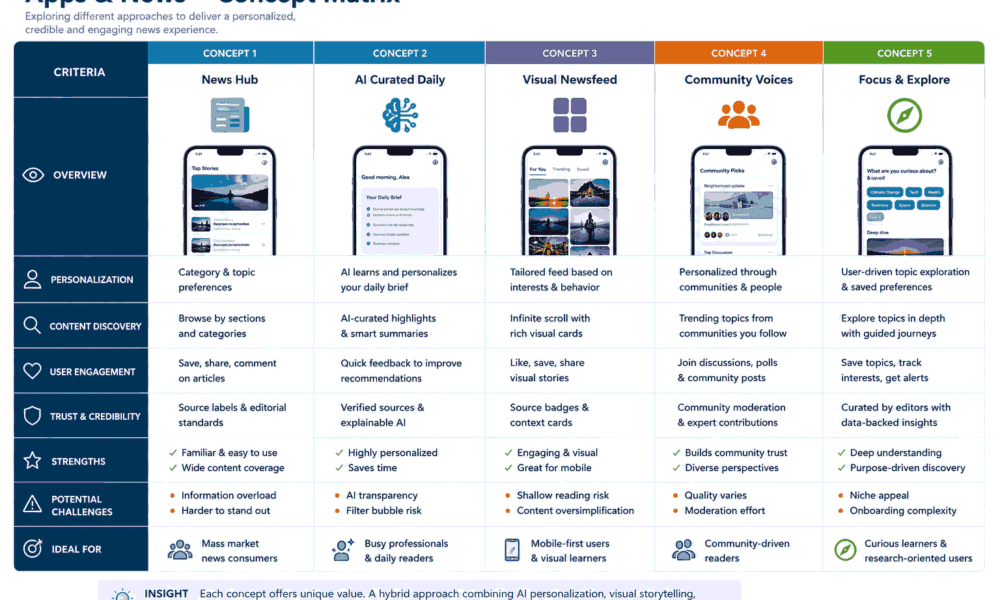
Apps and news are no longer separate industries. News organizations now publish through apps, and app platforms have become the primary distribution channel for journalism. This convergence raises new questions about algorithmic power, data collection, and who controls the information people see every day.
| Main Idea | Explanation | Examples | Key Terms |
| News Apps | Dedicated apps deliver curated, personalized news directly to phones, combining app convenience with journalism. They often include push alerts, offline reading, and topic-based filtering. | BBC News app, CNN app, Inshorts (60-word summaries), Apple News, Artifact AI News | |
| Filter Bubbles & Algorithms | Both apps and news platforms use recommendation algorithms to maximize engagement. This creates filter bubbles — users only see content matching existing beliefs, limiting diverse perspectives. | YouTube extreme content loops; Facebook politically aligned feeds; TikTok’s For You Page | |
| Data & Privacy | News platforms and apps both collect user data — reading habits, location, and device info — for targeted ads and personalization. This raises serious concerns about surveillance and data ownership. | GDPR in Europe, Apple’s App Tracking Transparency, news sites using tracking cookies |
Key Takeaways
Apps and digital news share more than a screen — they share business models, algorithms, and the challenge of earning and keeping user trust. Understanding both industries together gives you a clearer picture of how information is created, distributed, monetized, and sometimes manipulated in the digital age.
For students and professionals alike, the concepts in this matrix — from UX design and app permissions to editorial ethics and filter bubbles — are foundational knowledge for navigating the modern media landscape. Use this table to review, quiz yourself on key terms, and build a comprehensive mental model of how apps and news media work.







No Comment! Be the first one.