



The AI Secretly Watching Your Every Move ,and Why America Can’t Stop It
Discover how predictive AI technology reads your behavior, anticipates your next move, and reshapes everyday life in America — from shopping and healthcare to national security.

Table Of Content
- Introduction: Your Next Move Is Already Calculated
- Table of Contents
- What Is Predictive AI and How Does It Work?
- Predictive AI in Your Daily American Life
- 1. Retail and E-Commerce: Amazon Knew Before You Did
- 2. Healthcare: AI That Predicts Disease Before Symptoms Appear
- 3. Social Media and Content Platforms: The Scroll You Can’t Stop
- 4. Finance and Credit: AI Decides If You’re Trustworthy
- The Dark Side: Privacy, Manipulation, and Ethical Risks
- What Comes Next: The Future of Predictive AI in America
- Conclusion: Living in the Age of Anticipatory Intelligence
Introduction: Your Next Move Is Already Calculated
Before you reach for your phone to order pizza, an algorithm already knows you’re hungry. Before you search for a new pair of sneakers, a recommendation engine has already placed them in front of you. Before you even feel symptoms of illness, an AI system may have flagged your health risk weeks earlier.
Welcome to the era of predictive artificial intelligence — a rapidly evolving technology that doesn’t just react to what you do, it anticipates it. For millions of Americans, predictive AI is no longer science fiction. It’s the invisible intelligence shaping decisions, nudging behaviors, and rewriting the rules of modern life.
Table of Contents
What Is Predictive AI and How Does It Work?
Predictive AI is a branch of artificial intelligence that uses machine learning algorithms, historical data, and behavioral pattern recognition to forecast future actions, decisions, or events. Unlike traditional software that waits for your command, predictive AI runs continuously in the background — learning, adapting, and building a digital profile of who you are and what you’re likely to do next.
At its core, predictive AI relies on three pillars:
- Big Data Collection — Every click, scroll, purchase, search query, GPS location, and even the time you wake up becomes a data point fed into the system.
- Pattern Recognition — Machine learning models detect subtle correlations in this data that humans would never notice manually.
- Probabilistic Forecasting — The AI generates ranked predictions of future behavior with confidence scores, acting on the highest-probability outcomes.
The result? A system that doesn’t just know your past — it models your future.
Predictive AI in Your Daily American Life
1. Retail and E-Commerce: Amazon Knew Before You Did
If you’ve ever noticed Amazon recommending a product you were just about to search for, you’ve experienced predictive retail AI firsthand. Amazon’s recommendation engine, powered by deep learning models, accounts for an estimated 35% of the company’s total revenue, according to industry analysts.
The system tracks your browsing patterns, purchase history, wish lists, and even how long you hover over a product image — then cross-references that with millions of similar users to predict your next buy with startling accuracy.
Walmart, Target, and other major American retailers deploy similar systems, predicting regional demand weeks in advance to stock shelves before customers even know what they want.
2. Healthcare: AI That Predicts Disease Before Symptoms Appear
Perhaps the most life-changing application of predictive AI is in American healthcare. Hospitals and health systems across the U.S. are deploying AI models that analyze electronic health records (EHRs), genetic data, wearable device outputs, and lifestyle patterns to identify patients at high risk of conditions like sepsis, heart failure, diabetes, and even mental health crises — often days or weeks before clinical symptoms appear.
The Mayo Clinic, Johns Hopkins, and the Cleveland Clinic have all piloted predictive AI programs that flag at-risk patients for early intervention. In emergency departments, AI triage tools now help staff prioritize care before patients even describe their symptoms in full.
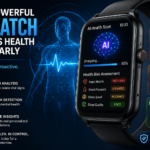
For everyday Americans, AI-powered wearables like the Apple Watch and Fitbit use predictive algorithms to detect irregular heart rhythms, declining sleep quality, and blood oxygen trends — sending warnings before a medical event occurs.
3. Social Media and Content Platforms: The Scroll You Can’t Stop
TikTok, YouTube, Instagram, and Netflix don’t just show you content you like — they show you content engineered to keep you watching longer than you planned. Their behavioral prediction engines model your emotional state, attention patterns, and psychological triggers to serve the exact video or post most likely to keep you engaged.
TikTok’s “For You Page” algorithm is widely regarded as the most powerful predictive content engine ever built, capable of profiling a new user’s deepest interests within just 30 minutes of activity — even if the user never explicitly states their preferences.
4. Finance and Credit: AI Decides If You’re Trustworthy
Major American banks and fintech companies use predictive credit AI to assess loan risk, detect fraud, and anticipate default behavior. Lenders now go far beyond your FICO score — AI systems analyze your spending patterns, bill payment timing, geographic mobility, and social behavior to decide whether to approve your mortgage, car loan, or credit card.
Fraud detection AI at Visa and Mastercard evaluates billions of transactions per day, flagging suspicious patterns in real time before a fraudulent charge is even completed.
The Dark Side: Privacy, Manipulation, and Ethical Risks
The power of predictive AI comes with profound ethical concerns that are impossible to ignore.
Data Privacy remains the biggest flashpoint for American consumers. Predictive AI systems require massive amounts of personal data to function — yet most Americans have little visibility into what data is collected, how it’s stored, or who it’s sold to. The Federal Trade Commission (FTC) has escalated its scrutiny of AI-driven data practices, but comprehensive federal AI privacy legislation remains elusive.
Algorithmic Bias is another critical issue. Predictive AI systems trained on historical data can inherit — and amplify — existing societal biases. Studies have shown that some predictive AI tools used in hiring, lending, and even criminal justice have produced racially and economically discriminatory outcomes.
Behavioral Manipulation raises the question: if an AI knows what you’ll do before you do it, can it steer that behavior toward outcomes that serve corporations rather than individuals? Critics argue that social media predictive engines have deliberately exploited psychological vulnerabilities to maximize engagement, contributing to mental health crises — particularly among American teens.
What Comes Next: The Future of Predictive AI in America
The next generation of predictive AI will be even more granular and proactive. Generative AI combined with behavioral modeling will enable systems that don’t just predict what you’ll search — they’ll draft the answer before you ask the question.
Emotion AI — systems that read micro-expressions, voice tone, and physiological signals — is already being piloted in customer service and law enforcement, raising new civil liberties debates.
Meanwhile, federal and state lawmakers are beginning to act. California’s AI transparency laws and proposed federal frameworks signal that regulation of predictive AI will be a defining policy battle of the late 2020s.
Conclusion: Living in the Age of Anticipatory Intelligence
Predictive AI is not coming — it’s already here, embedded in the apps, devices, platforms, and institutions that define American daily life. It saves lives in hospitals, powers the economy through smarter commerce, and makes entertainment endlessly personalized.
But its unchecked growth poses real risks to privacy, autonomy, and equity. Understanding how predictive AI works — and demanding accountability from the companies and governments that deploy it — is no longer optional for informed Americans.
The AI knows what you’ll do next. The question is: do you?
Read More : 7 Powerful AI Tools That Can Save You 10+ Hours Every Single Week





No Comment! Be the first one.