



This Powerful AI Watch Detects Health Risks Early
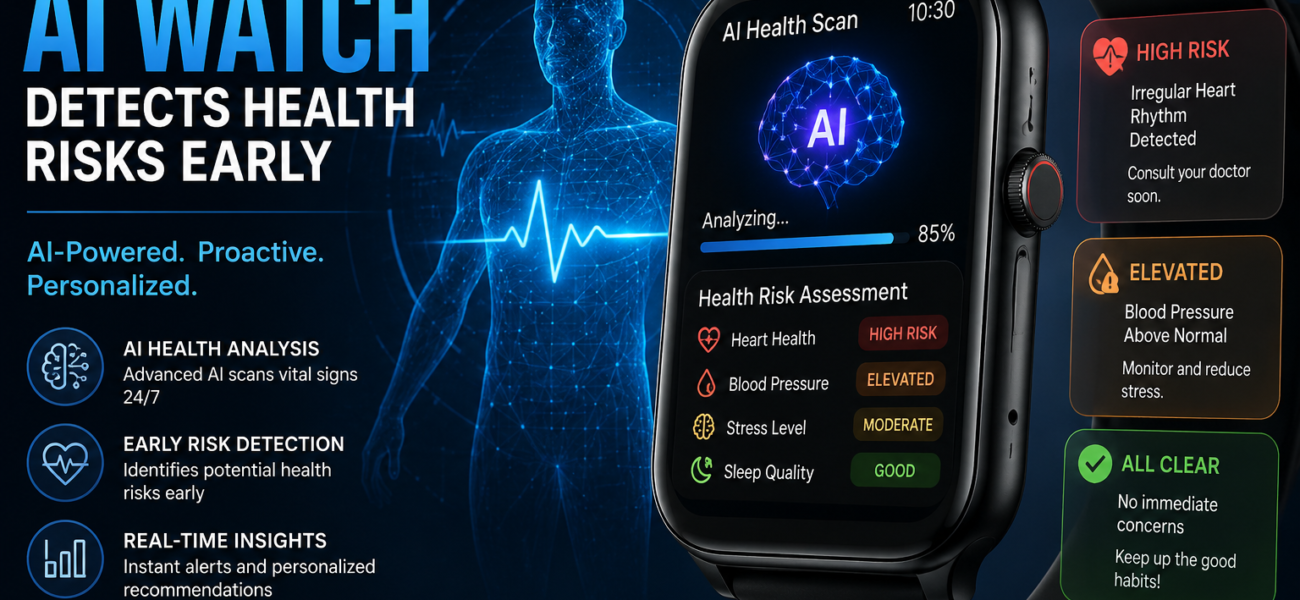
The latest generation AI-powered watches do far more than count steps or send notifications

How next-generation smartwatches are using artificial intelligence to catch serious conditions before symptoms appear — and what you need to know before buying one.
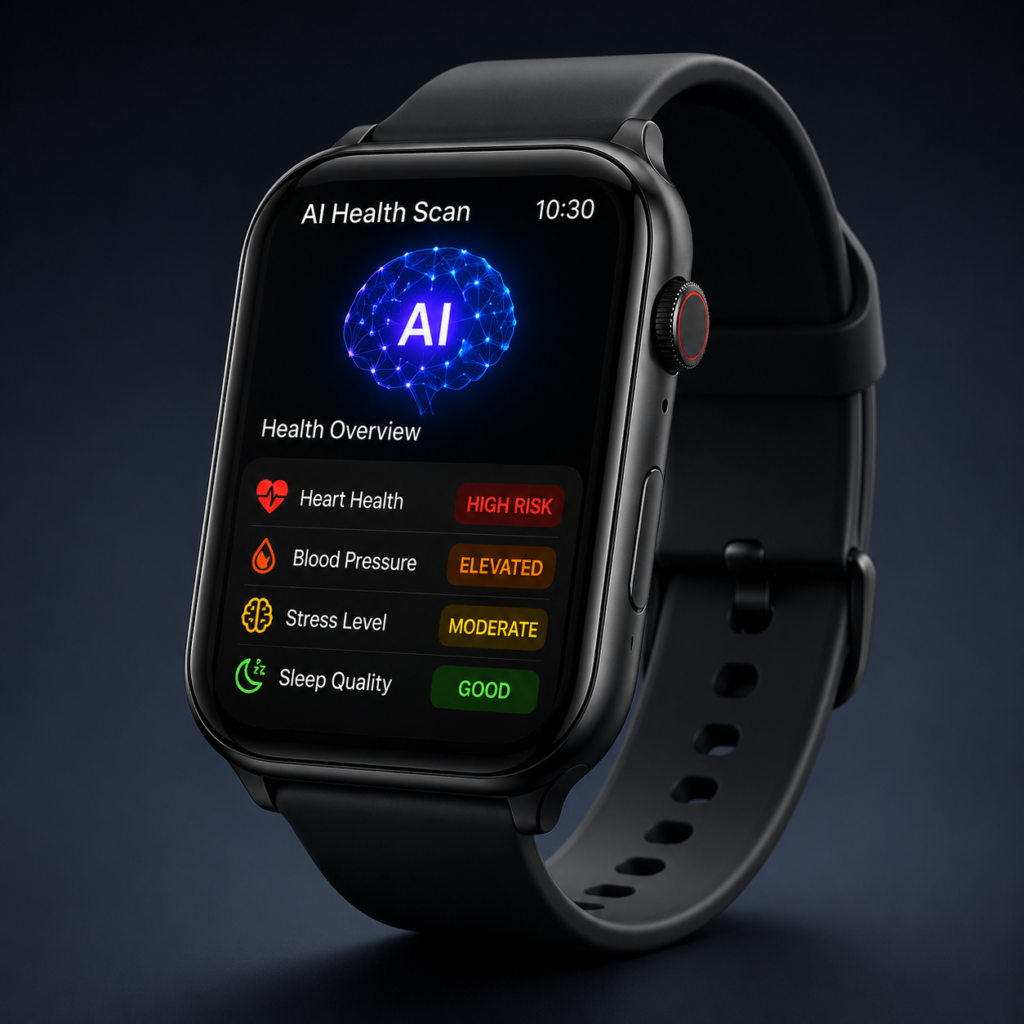
Artificial intelligence is no longer confined to hospitals and research labs. Today, it lives on your wrist — quietly analyzing your body around the clock and alerting you to health risks you might not feel for months or even years.
The latest generation of AI-powered smartwatches does far more than count steps or send notifications. These devices continuously monitor physiological data — heart rhythm, blood oxygen, skin temperature, stress biomarkers, and more — then run that data through sophisticated machine learning models trained on millions of patient records. The result: personalized, real-time health intelligence that was, until recently, only available inside a cardiologist’s office.
Adoption is surging on both sides of the Atlantic. In the United States, the FDA has cleared several AI wearable algorithms as Class II medical devices. In Europe, leading models carry CE marking under the EU Medical Device Regulation (EU MDR). Analysts project the global AI health-wearable market will exceed $60 billion by 2028.
What an AI Health Watch Actually Monitors
Modern AI health watches go beyond basic fitness tracking. Here is a breakdown of the core health metrics these devices continuously analyze:
- Electrocardiogram (ECG / EKG): On-demand single-lead ECGs detect atrial fibrillation (AFib), irregular rhythms, and other cardiac anomalies — a feature once limited to clinical hardware.
- Heart Rate Variability (HRV): AI algorithms track the subtle variation between heartbeats as a proxy for autonomic nervous system health, stress load, and recovery status.
- Blood Oxygen Saturation (SpO2): Continuous pulse oximetry flags drops associated with sleep apnea, respiratory illness, and cardiovascular compromise.
- Skin Temperature Sensing: Baseline deviations as small as 0.2 degrees C can signal infection, hormonal shifts, or inflammatory conditions days before a fever develops.
- Blood Pressure Estimation: Using photoplethysmography (PPG) and AI models, select devices estimate blood pressure trends — still the subject of regulatory scrutiny in both the U.S. and the EU.
- Stress & Cortisol Proxies: Electrodermal activity, breathing rate, and HRV are combined to generate a composite stress score updated throughout the day.
- Sleep Architecture Analysis: AI distinguishes REM, light, and deep sleep stages, flagging patterns linked to cognitive decline, diabetes risk, and mental health conditions.
- Fall Detection & Gait Analysis: Machine learning models trained on accelerometer data recognize dangerous falls and subtle changes in walking patterns associated with early neurological decline.
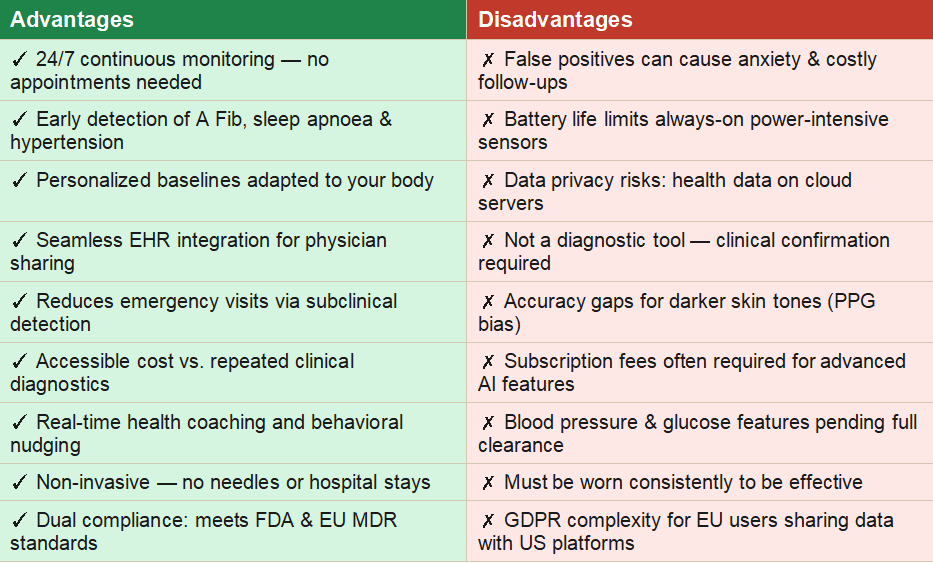
Advantages & Disadvantages of AI Health Watches
The following side-by-side comparison covers the key benefits and limitations reported by users and reviewed in clinical literature:
Top AI Health Watches in 2026: Feature Comparison
The table below compares the leading AI health watches available to consumers in the United States and Europe as of mid-2026:
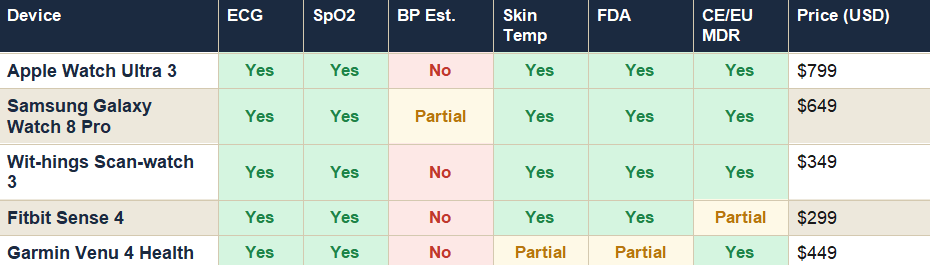
Note: Regulatory status and features are subject to regional variation. Always verify current clearance status with the manufacturer before purchase for medical use.
Regulatory Landscape: U.S. vs. Europe
Navigating regulatory compliance is essential before relying on any AI health watch feature for medical decisions:
| Regulatory Factor | United States (FDA) | European Union (EU MDR) |
| Governing body | U.S. Food & Drug Administration | Notified Bodies under EU MDR 2017/745 |
| ECG algorithm clearance | Class II 510(k) clearance required | CE marking, Class IIa device |
| Blood pressure monitoring | Pending; under De Novo review | Cleared in select markets with clinical validation |
| Data privacy law | HIPAA (health data); state-level additions | GDPR — stricter cross-border data transfer rules |
| Post-market surveillance | MedWatch voluntary reporting | Mandatory PSUR reporting required |
Who Should Consider an AI Health Watch?
- Adults 45 and older: with elevated cardiovascular or metabolic risk factors who want proactive monitoring between annual check-ups.
- Patients with known AFib or arrhythmia: who need clinical-grade rhythm tracking outside of hospital-grade Holter monitors.
- Athletes and high-performance professionals: seeking recovery optimization and overtraining prevention.
- Caregivers of elderly relatives: who want fall detection and passive health monitoring for aging parents living independently.
- People with sleep disorders: looking for non-polysomnography insight into sleep apnea risk before a formal sleep study.
- Wellness-focused individuals: who want data-driven insight into stress, lifestyle habits, and long-term health trends.
The Bottom Line
AI health watches represent a genuine leap forward in preventive medicine. For millions of Americans and Europeans, these devices offer the closest thing yet to a personal health sentinel — one that never sleeps, never misses a shift, and gets smarter over time.
They are not perfect. False positives are real. Privacy concerns are legitimate. And no smartwatch replaces a physician. But as tools for early detection and behavioral motivation, the best AI health watches available today are worth serious consideration for anyone prioritizing long-term health.
Before purchasing, verify that the model you choose carries appropriate regulatory clearance for your country — and always discuss any alerts or readings with a licensed healthcare professional.






No Comment! Be the first one.