What Is the #1 Insurance Company in America?
Choosing the right insurance company can save you money, protect your family, and provide peace of mind when unexpected problems arise. But with hundreds of insurance providers operating across the United States, one important question continues to attract attention:
What is the #1 insurance company in America?
The answer depends on the type of insurance you need.
According to the Insurance Information Institute, based on 2025 industry data, State Farm ranks first among U.S. property and casualty insurers by direct premiums written, with approximately $115.1 billion in premiums and a 10.5% market share. This category includes auto, homeowners, and commercial insurance. Source
However, being the largest insurer does not automatically make a company the cheapest or the best choice for every American.
Let’s explore the leading insurance companies, their advantages and disadvantages, and how to find the right coverage near you.
1. State Farm: America’s Leading Property and Casualty Insurer
State Farm is one of America’s best-known insurance brands. Founded in 1922, the company offers auto, home, renters, life, and other insurance products.
Its large network of agents makes it a popular option for people who prefer personal assistance rather than managing everything online.
Pros of State Farm
- Wide availability: Offers insurance in many U.S. markets, subject to state and product availability.
- Local agents: Customers can speak with agents about policies, coverage, and claims.
- Multiple policies: Eligible customers may qualify for discounts by bundling auto and homeowners insurance.
- Broad coverage options: Products include car insurance, homeowners insurance, renters insurance, and life insurance.
- Established reputation: Its long operating history and large customer base make it a major industry player.
Best for: People who value local agents, established service networks, and the convenience of combining multiple insurance policies.
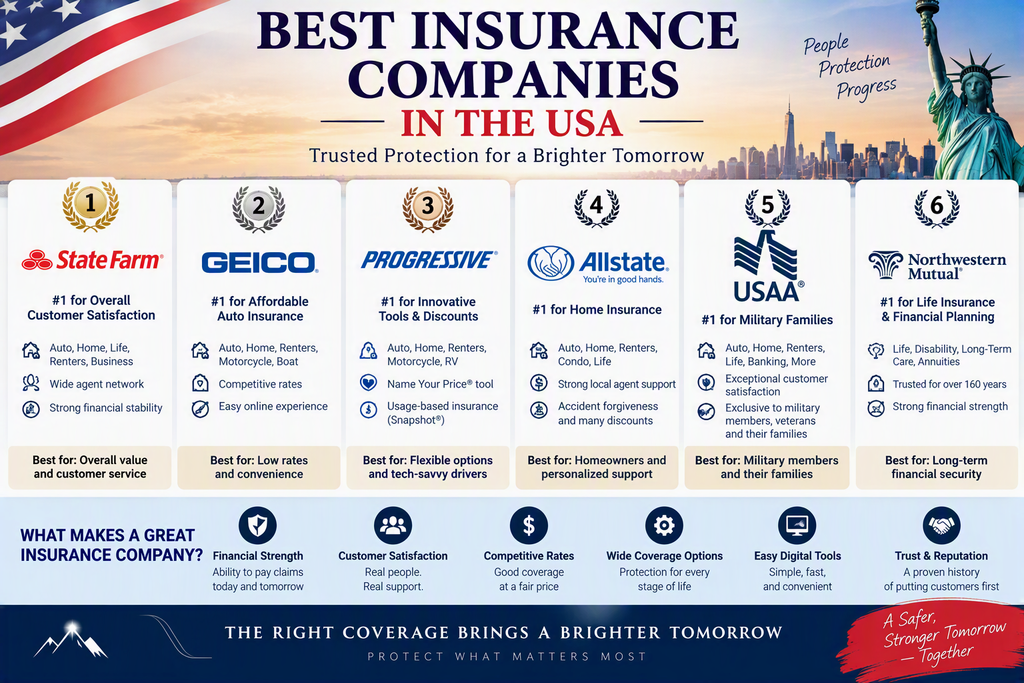
2. America’s Other Major Insurance Companies
State Farm is not the only company worth considering. Depending on your circumstances, these insurers may be competitive alternatives.
Progressive
Progressive is a major provider of auto insurance and is also a leading commercial auto insurer.
Pros: Online quote tools, multiple coverage options, and potential savings for eligible drivers.
Cons: Rates vary considerably by driver, location, vehicle, and claims history.
Best for: Drivers who want to compare quotes digitally and explore different policy options.
GEICO
GEICO, part of Berkshire Hathaway’s insurance operations, is widely recognized for its online and telephone-based insurance services.
Pros: Convenient digital tools, online policy management, and potential discounts for qualifying customers.
Cons: Service options and pricing depend on the policy and location, and some customers may prefer an agent-based experience.
Best for: People who prefer handling insurance tasks online or by phone.
Allstate
Allstate offers auto, home, renters, and other insurance products in eligible markets.
Pros: Multiple coverage options, agent support, and possible bundling discounts.
Cons: Premiums can be relatively expensive for certain customers, and discounts vary.
Best for: Customers who want to compare different coverage levels and work with an insurance agent.
USAA
USAA provides insurance and financial services primarily to eligible military members, veterans, and qualifying family members.
Pros: Specialized services for the military community and a range of insurance products.
Cons: Membership eligibility restrictions mean it is not an option for everyone.
Best for: Eligible military families looking for specialized insurance services.
Find more here : Ultimate Amex Platinum Christmas Offer Guide 2026
3. How Much Does Insurance Cost in America?
There is no single price for insurance. Your premium depends on the type of policy, coverage limits, deductible, location, age, claims history, and other risk factors.
For example, auto insurance prices can differ significantly between two drivers living in the same city.
A driver with a clean record and an older vehicle may receive a very different quote from a young driver with recent accidents and a new car.
Home insurance costs also vary depending on the property’s value, construction, location, and exposure to risks such as hurricanes, wildfires, or flooding.
To find a competitive price, request quotes from at least three insurers. Compare identical liability limits, deductibles, exclusions, and optional benefits rather than choosing solely by the lowest advertised price.
4. How to Find Insurance Near You
Looking for insurance agents near your home? Start with the official websites of the companies you are considering.
- State Farm: https://www.statefarm.com/
- Progressive: https://www.progressive.com/
- GEICO: https://www.geico.com/
- Allstate: https://www.allstate.com/
- USAA: https://www.usaa.com/
Use each website’s quote tool or agent locator to check availability in your ZIP code. You can also consult your state’s insurance department to verify an insurer’s license and review consumer complaint information.
Before visiting an office, confirm its address, opening hours, and whether the agent handles the specific type of insurance you need.
5. What Are the Biggest Mistakes People Make When Buying Insurance?
Many consumers focus exclusively on monthly premiums. That can be a costly mistake.
A cheaper policy may have a higher deductible, lower liability limits, or exclusions that leave you responsible for substantial expenses after an accident or disaster.
Other common mistakes include failing to disclose relevant information accurately, overlooking policy exclusions, assuming every natural disaster is covered, and renewing a policy without comparing alternatives.
For homeowners, standard policies often exclude flood damage, which may require separate flood insurance. Auto insurance also has different coverage types, and minimum state requirements may not provide enough protection for every household.
Read the policy carefully and ask questions before signing.
6. The Final Verdict: Which Insurance Company Is Number One?
If you measure the title by total property and casualty premiums written, State Farm is the leading U.S. insurer based on the cited 2025 industry rankings.
But the best insurance company for you depends on what you need.
State Farm may appeal to customers who value local agents. Progressive and GEICO may suit shoppers who want to compare online options. Allstate may appeal to those seeking agent support and multiple policy choices. Eligible military families may also want to investigate USAA.
The smartest decision is not necessarily choosing America’s largest insurer. It is choosing a financially sound, appropriately licensed company that offers the coverage you need at a price you can afford.
Before buying, compare at least three quotes, examine the coverage details, and check the insurer’s complaint record.
Your insurance policy should do more than meet a legal requirement. It should help protect your finances when life takes an unexpected turn.