


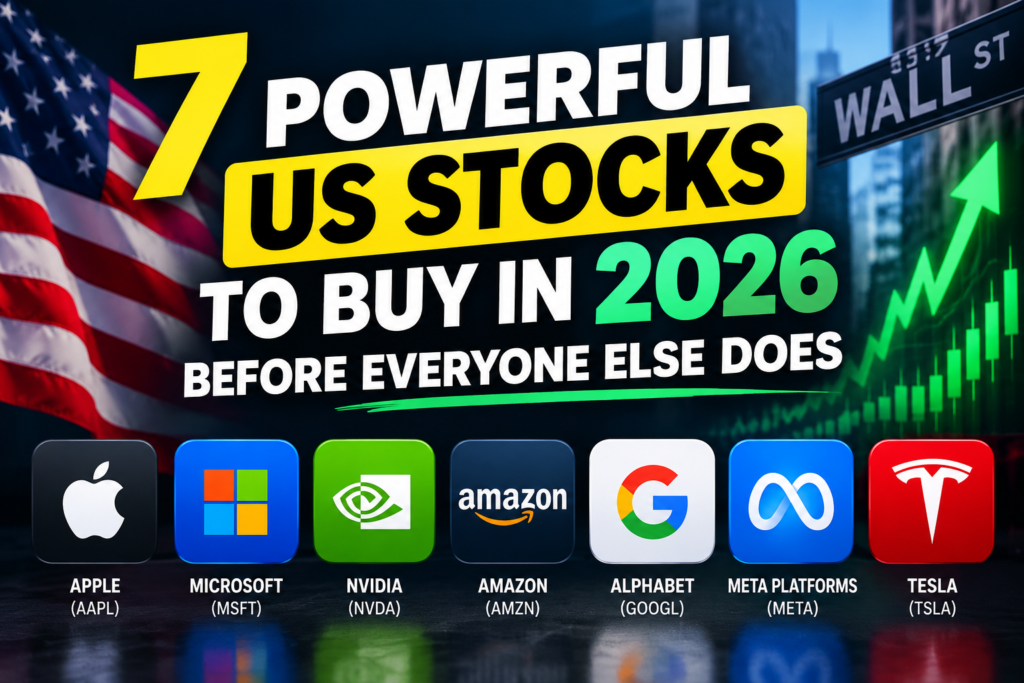
A beginner-friendly guide for American investors. This is educational content, not personalized financial advice.
Investing in the US stock market has never been easier. You can open an account from your couch, buy a slice of a company for a few dollars, and pay $0 in commissions. The hard part is no longer getting started. It is choosing the right app and building good habits. Here is how to invest in US stocks in 2026, which apps stand out, and how to create your account step by step.
Step 1: Decide What You Are Investing For
Before downloading anything, define your goal. Retirement decades away calls for a different approach than saving for a house in five years.
- Long-term wealth or retirement: Consider a Roth or Traditional IRA, plus a regular taxable brokerage account for extra flexibility.
- Medium-term goals: Use a taxable account and keep your mix more conservative.
- Short-term cash needs: The stock market is usually the wrong place for money you need within a year or two.
Step 2: Learn the Basics
Most beginners do well with simple building blocks:
- Individual stocks: Ownership in a single company. Higher potential reward, higher risk.
- ETFs and index funds: Baskets of many stocks, such as funds that track the S&P 500. They offer instant diversification at low cost.
- Fractional shares: Buy part of a share for as little as $1, so a high-priced stock no longer requires hundreds of dollars.
Many investors keep a core of low-cost index funds and, if they wish, a small portion for individual stock picks. Investing regularly over time, often called dollar-cost averaging, can smooth out the bumps of a volatile market.
The Best Stock Trading Apps in the USA for 2026
Review sites do not agree on a single winner, because the “best” app depends on who you are. Money.com ranks Fidelity best overall, Robinhood best for beginners, and SoFi Invest best for low-cost trading. StockBrokers.com’s testing puts Charles Schwab, Interactive Brokers, and Fidelity at the top for mobile apps. NerdWallet singles out Robinhood for the simplest design, Interactive Brokers for the widest investment selection, and Public for low introductory margin rates and cheap options trades.

1. Fidelity: Best Overall
Pros: $0 commissions on US stocks and ETFs, no account minimum, fractional shares, excellent research and retirement tools, strong customer service.
Cons: The experience can feel busy to total beginners, and the most advanced trading tools are in the separate Active Trader Pro platform.
2. Robinhood: Best for Beginners
Pros: Clean, intuitive mobile-first design, $0 commissions, no per-contract fee on options, quick signup.
Cons: Research and educational tools are lighter than at the big brokers, and the easy design can tempt people to trade too often.
3. Charles Schwab: Best for Education and Support
Pros: $0 stock trades, no minimum, robust research, branches and phone support, advanced thinkorswim platform for active traders.
Cons: Options cost $0.65 per contract, and fractional share investing is more limited than at some rivals.
4. Interactive Brokers: Best for Advanced Investors
Pros: The widest selection of investments, including global markets, professional-grade tools, and low margin costs.
Cons: It has a steeper learning curve and is more than most beginners need.
5. SoFi Invest: Best for Low-Cost, Simple Investing
Pros: Commission-free trades, tiny-dollar investing through fractional shares, and the ability to manage banking and investing in one ecosystem.
Cons: Fewer research and charting tools than larger brokers.
Honorable Mentions
E*TRADE earns praise for easy-to-use apps, with Power E*TRADE aimed at options traders. Public is appealing for low margin rates and cheap options.
Technology Sector:
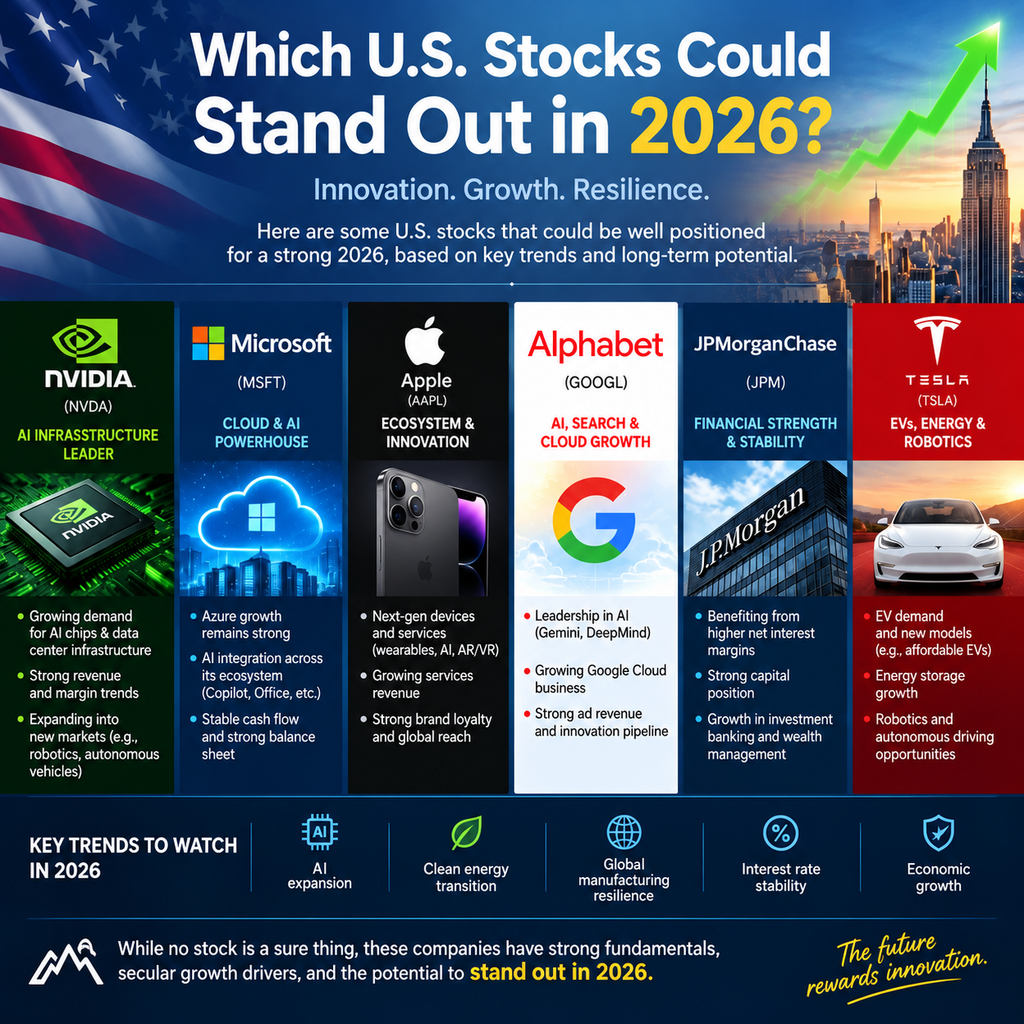
- NVIDIA Corporation (NVDA): A leader in AI hardware and software, NVIDIA holds a dominant position in AI accelerators, with data center revenue projected at $194 billion, marking a 68% year-over-year increase. (investtofire.com)
- Microsoft Corporation (MSFT): With a robust cloud platform and AI initiatives, Microsoft is well-positioned for sustained growth. (walnutinvest.com)
Consumer Staples:
- Walmart Inc. (WMT): As the world’s largest retailer, Walmart offers defensive growth and a strong dividend yield, appealing to value-seeking investors. (primestockfinder.com)
- Costco Wholesale Corporation (COST): Known for its membership model and resilient sales, Costco provides stability and consistent growth. (primestockfinder.com)
Healthcare:
- UnitedHealth Group Incorporated (UNH): As a diversified health insurer, UnitedHealth is expected to deliver incremental earnings growth through margin recovery and its diversified business lines. (themarketreporter.co.uk)
Energy:
- Cheniere Energy, Inc. (LNG): With rising demand for liquefied natural gas and strong analyst support, Cheniere Energy is poised for growth. (primestockfinder.com)
Artificial Intelligence:
- Meta Platforms, Inc. (META): Investing in AI-enhanced advertising and emerging platforms like Muse, Meta is positioned for earnings acceleration and multiple expansion. (primestockfinder.com)
Financials:
- Visa Inc. (V): As the world’s largest payments network, Visa benefits from a vast transaction volume and strong network effects, ensuring steady growth. (walnutinvest.com)
Flow Chart: Which App Is Right for You?
START: What kind of investor are you?
|
|– “I’m brand new and want it simple”
| –> ROBINHOOD
|
|– “I want one account for everything: retirement,
| long-term investing, great research”
| –> FIDELITY (BEST OVERALL)
|
|– “I want strong education + in-person/phone help”
| –> CHARLES SCHWAB
|
|– “I trade often, use options, or want global markets”
| –> INTERACTIVE BROKERS (or Schwab/E*TRADE)
|
|– “I want low costs and banking + investing together”
–> SOFI INVEST
Quick Comparison
| App | Best For | Stock Commission | Standout Strength | Main Drawback |
| Fidelity | Most investors | $0 | Research + retirement tools | Busier interface |
| Robinhood | Beginners | $0 | Simplicity | Limited research |
| Schwab | Education/support | $0 | Service + thinkorswim | $0.65 options fee |
| Interactive Brokers | Advanced users | $0 on its Lite plan | Global access | Learning curve |
| SoFi Invest | Low-cost simplicity | $0 | Banking + investing | Fewer tools |
Our Pick: Fidelity
For most Americans, Fidelity is the best all-around choice in 2026. It combines $0 commissions, no minimums, fractional shares, strong research, and full retirement account options, so you will not outgrow it. Beginners who value simplicity above everything may prefer Robinhood, and serious traders may lean toward Interactive Brokers. Still, Fidelity leads the field for the typical long-term investor. This is a judgment based on the published reviews above, not a guarantee, so compare fees and features yourself before you commit.
How to Create Your Account and Username
The steps are nearly identical across brokers. Fidelity is used here as the example.
- Download the app or visit the website. Get the official app from the Apple App Store or Google Play, or go directly to the broker’s official site. Avoid links in ads or messages.
- Tap “Open an account.” Choose the account type: individual brokerage, Roth IRA, Traditional IRA, or joint.
- Enter your personal details. Expect to provide your legal name, date of birth, address, phone number, email, and Social Security number. US brokers are required by law to verify your identity.
- Answer employment and investing questions. These are standard regulatory questions about your job, income, and experience.
- Create your username. Pick something unique that does not contain your full name, birth date, or SSN digits. Mix letters and numbers, and avoid anything easy to guess.
- Create a strong password. Use a long, unique passphrase and store it in a password manager.
- Turn on two-factor authentication. Use an authenticator app or security key where possible, since text messages are less secure.
- Link your bank account. Connect your checking account through ACH transfer, then fund your account. Transfers can take a few business days.
- Place your first trade. Search for a ticker or fund, choose a dollar amount or number of shares, and review the order before confirming.
Some apps, such as Robinhood, log you in with your email instead of a separate username, but the process is otherwise the same.
Smart Habits to stock in US for 2026
- Start small. You do not need thousands of dollars.
- Diversify. Avoid putting all your money in one stock.
- Mind the fees. Commissions may be $0, but check fund expense ratios and any margin or account fees.
- Avoid emotional trading. Panic selling and chasing hype are costly mistakes.
- Know the tax rules. Profits on stocks held over a year are generally taxed at lower long-term rates than short-term gains.
- Check protections. Make sure your broker is a member of SIPC, which protects securities if a brokerage fails. It does not protect against market losses.
Final Thoughts
Investing in US stocks in 2026 comes down to three decisions: know your goal, pick a trustworthy app, and stay consistent. Fidelity is our top pick for most investors, Robinhood shines for simplicity, and Interactive Brokers suits advanced traders. Whichever you choose, remember that all investing involves risk, including the possible loss of principal. Consider speaking with a licensed financial advisor or tax professional about your situation.
Fees, features, and rankings change often. Confirm current details on each broker’s official website before opening an account.
Read More : Best car Loan near you in California Immediately Action